Operating System Similator
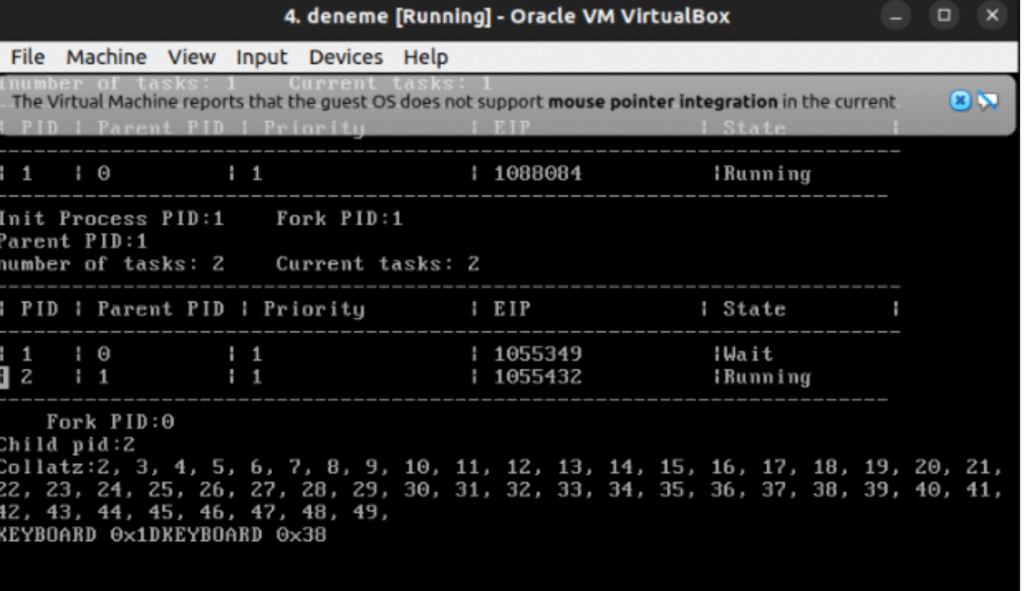
This technical project focused on developing critical process management and scheduling mechanisms for a fundamental operating system kernel. The work successfully implemented essential POSIX-compliant system calls, including process creation (fork), program loading (execve), process termination (exit), getting the process ID (getpid), and process synchronization (waitpid). The project supports multitasking by utilizing a Process Table that monitors process states, priorities, and parent-child relationships. Process scheduling was implemented using both Round Robin (based on timer interrupts) and Preemptive Priority-Based algorithms, which included dynamic priority adjustments. The developed operating system kernel was packaged as an ISO file and successfully run and tested within the Oracle VM VirtualBoxvirtualization environment.
E-Commerce Database
This technical project details the database design and core functionalities for a developed e-commerce web application. The report outlines the logical structure of the database, which includes tables to efficiently store essential information such as users, addresses, products, shopping baskets, orders, payments, and invoices. The database design adheres to advanced normalization principles, aiming for Boyce-Codd Normal Form (BCNF) and even addressing multi-valued dependencies up to Fourth Normal Form (4NF) to ensure data integrity and minimize redundancy. Core functionalities of the system, which is built using PHP for the backend, MySQL for the database, and HTML, CSS, JavaScript for the web interface , include user registration and login,product search/filtering,cart operations, checkout with multiple payment options, and order/return tracking. Furthermore, the project demonstrates the implementation of database integrity through various Triggers—such as automatically setting creation dates for new basket records,updating order item counts upon item deletion, and validating email addresses upon user updates along with complex Join Queries to effectively merge data from related tables.
TurboCloak VPN
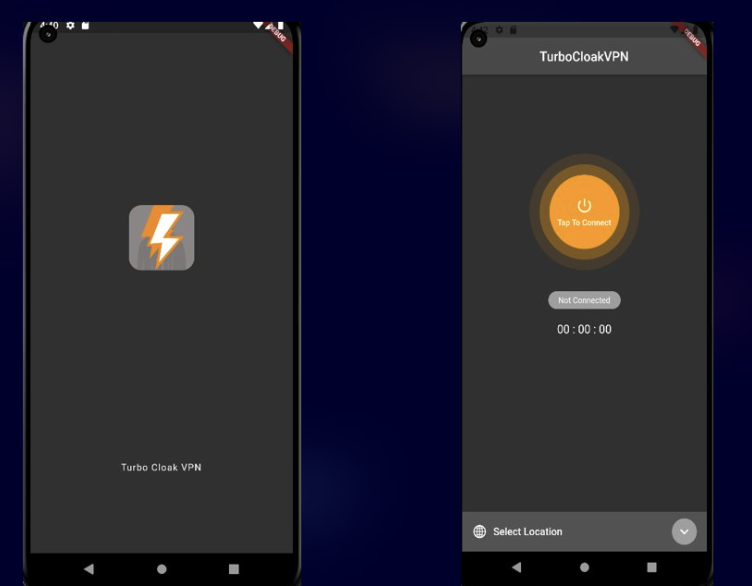
This VPN project is a solution aimed at providing users with secure and private internet access. The project’s backendwas developed using the Python programming language, specifically with Flask, a fast and lightweight micro-framework, for server-side processes, user authentication, and managing VPN connections. The industry-standard OpenVPN protocol was utilized for secure VPN tunneling. The mobile application, which allows users to easily connect to the VPN service and manage settings, was built using the Flutter framework with a single codebase that runs on both iOS and Android platforms. As a result, this project delivers a complete, modern, and efficient VPN solution that combines the power of Flask, Python, and OpenVPN with the cross-platform capabilities of Flutter.
Bibakbox Server
This project involves the implementation of a simplified Dropbox application, named BibakBOXServer, designed as a multi-threaded internet server. The server must be capable of handling multiple clients simultaneously , ensuring full synchronization between both the server and client directories; this means that any file created, deleted, or updated must be reflected on both sides. Additionally, the server is required to maintain a logfile under each client’s respective directory, recording the names and access times of created, deleted, and updated files. The project mandates proper handling of the SIGINT signal on both the server and client sides. The server should be executed in the format BibakBOXServer [directory] [threadPoolSize] [portnumber] , and the client in the format BibakBOXClient [dirName] [portnumber]. The project report shows that the program was successfully tested with 10, 20, and 50 simultaneously running clients.
MotoTalk Mobile App
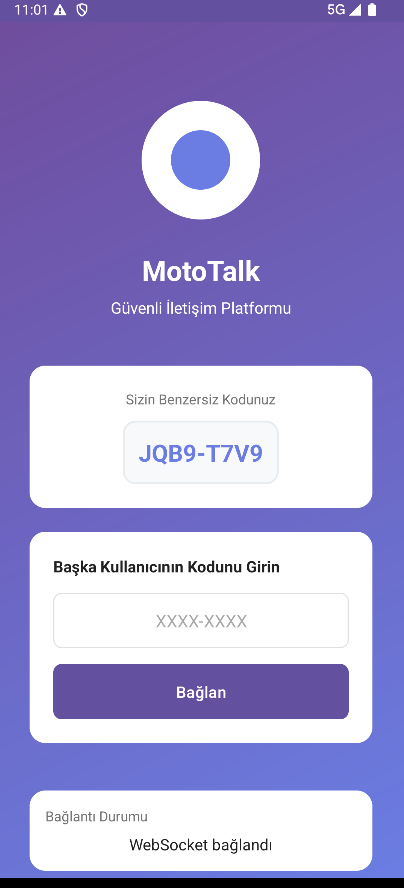
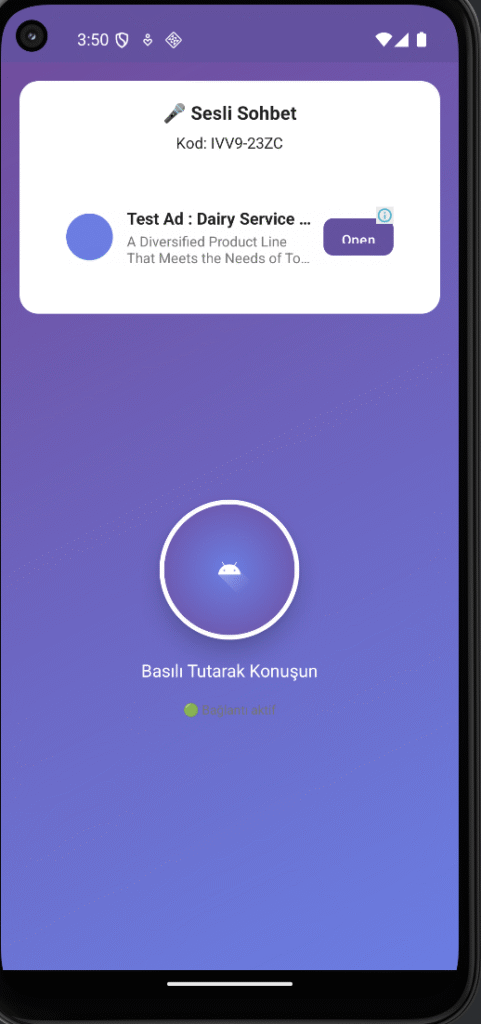
Mototalk is an innovative mobile application that enables real-time voice communication similar to a walkie-talkie. Users can connect by entering the other person’s connection code and sending a request, which, once accepted, initiates instant communication. Through its push-to-talk feature, users can activate voice transmission simply by pressing a button. The frontend of the application is developed using Kotlin, while the backend is built with Node.js. Utilizing WebRTC and Socket technologies, Mototalk delivers low-latency, uninterrupted, and high-quality voice communication. Designed for those who need fast, practical, and secure communication, Mototalk offers a modern alternative to traditional walkie-talkies.